

Fried Whiting

Ingredientes
Instructions
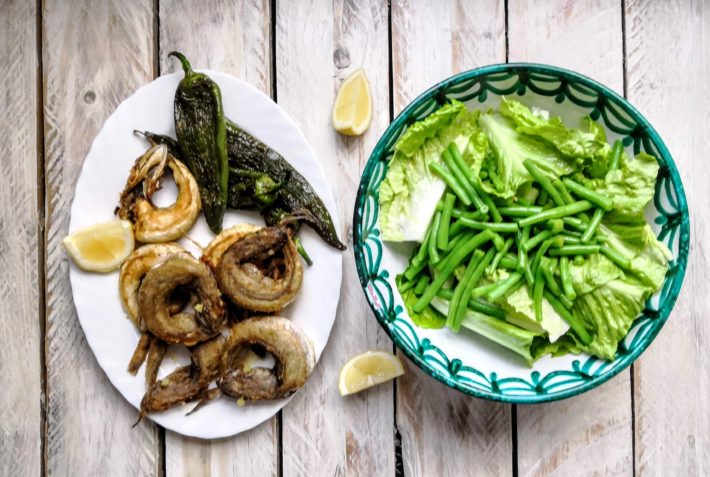
Wash the fish and clean out the guts, keeping the head on. It is best to have the fishmonger clean it for you.
Season with salt and tuck the fish tail into its mouth, closing the mouth around it so it bites down. Once done, coat it in flour.
Heat plenty of oil, enough to cover the fish once it is in the pan. It is important to turn the fish so it fries evenly. Once the whiting are golden, remove them and place on kitchen paper to drain. A wedge of lemon on the serving plate is recommended. A good green salad pairs perfectly with this fish.
Curiosity
Thanks to the ICTIOTERM project carried out by researchers from the Institute of Marine Sciences of Andalusia and the Department of Philology and Translation at the Pablo de Olavide University in Seville, we can share the curious terminology used in Andalusia for hake, well worth a read:
The size of the fish affects its market price and, as a result, it gets different names. In increasing order of size, the names used across the surveyed towns include:
- chupa-chup (El Puerto, Malaga)
- cigarrito (Punta Umbria)
- trigo (Chipiona, El Puerto, Puerto Real)
- carioca (El Terron, El Puerto, Cadiz, Puerto Real, Barbate)
- pijotita (Punta Umbria, Sanlucar)
- pijotilla (Estepona, Fuengirola, Malaga, Caleta de Velez, Almunecar, Motril, Castell de Ferro)
- pijota (practically every port in the study area)
- pijoton (Punta Umbria, Huelva, Chipiona, Puerto Real, Conil, Marbella, Motril, Castell de Ferro)
- media pescadilla (Punta Umbria)
- pescadilla (practically every port in the study area)
- pescada (El Terron, Huelva, Chipiona, Puerto Real, Sancti Petri, Malaga, Almunecar, Salobrena, Motril, Almeria)
- merluceta (Punta Umbria) and merlucilla (Tarifa)
- merluza (practically every port in the study area)
- merluzon (Chipiona)
Since this species can grow to a considerable size, around 150 cm long, the boundaries between each name are fairly loose and depend on who you ask. Roughly: chupa-chup, cigarrito, trigo and carioca refer to small fish of 10-15 cm; pijota refers to a fish under 25 cm, just below the minimum legal catch size; pijoton is a bit bigger, around 0.5 kg; media pescadilla and pescadilla measure 40-50 cm; pescada is the “large” specimen; and merluza and merluzon are the biggest of all.
